Original work by DAVID FIELD
RAMSGATE, UK
Oil on board
Framed size 61 x 42 cm (48 x 28.5 unframed)
Signed, 2003
Free UK shipping included with purchase price
Please get in touch for international shipping costs
David Field (b.1937) is a formally trained British painter whose work captures the theatre of everyday life along the coastlines of south-east England and west Wales. His earlier works are rooted in the seaside towns of Kent, particularly Ramsgate and Deal, where fairgrounds, harbour walls and promenades feature as carefully staged settings. These paintings observe human presence with wry understatement. Figures pause, gather, or drift through the scene, incidental yet essential to the story unfolding.
Field’s paintings are defined by a strong sense of symmetry and balance. His compositions are often centrally framed, lending a post-modern, almost hyperreal stillness, like a tableau paused mid-narrative. A soft, pastel-leaning palette enhances this storybook quality, while small, telling details of human life are observed with gentle humour.
Now in his late eighties and still painting, David Field’s work feels newly resonant. While his career has unfolded largely outside the commercial spotlight, David’s paintings reveal a distinctive and quietly assured voice, one that feels both timeless and strikingly contemporary. Deeply British, quietly cinematic, and perfectly attuned to contemporary interiors seeking narrative depth and a sense of place.
About this still life, David said:“This was an incidental piece, painted at home in the front room of our house in Ramsgate. It’s really just a collection of objects that had gathered there. There’s a postcard of a painting by the Belgian surrealist Magritte, and in the top right corner a small Renaissance image of a young man. I’ve always liked the way different periods can sit together quite naturally in a domestic setting. My wife, Pam, was marvellous at finding fossils. There were many along Deal beach. She also discovered small, round stone balls which we think may have been fired from Henry VIII’s coastal fortifications. They fascinated us. Pam often used fossils in her own work as a reference for colour, and I think that sense of natural form and tone found its way into this painting too. It’s a quiet record of the things that were around us at the time.”
Original work by DAVID FIELD
RAMSGATE, UK
Oil on board
Framed size 61 x 42 cm (48 x 28.5 unframed)
Signed, 2003
Free UK shipping included with purchase price
Please get in touch for international shipping costs
David Field (b.1937) is a formally trained British painter whose work captures the theatre of everyday life along the coastlines of south-east England and west Wales. His earlier works are rooted in the seaside towns of Kent, particularly Ramsgate and Deal, where fairgrounds, harbour walls and promenades feature as carefully staged settings. These paintings observe human presence with wry understatement. Figures pause, gather, or drift through the scene, incidental yet essential to the story unfolding.
Field’s paintings are defined by a strong sense of symmetry and balance. His compositions are often centrally framed, lending a post-modern, almost hyperreal stillness, like a tableau paused mid-narrative. A soft, pastel-leaning palette enhances this storybook quality, while small, telling details of human life are observed with gentle humour.
Now in his late eighties and still painting, David Field’s work feels newly resonant. While his career has unfolded largely outside the commercial spotlight, David’s paintings reveal a distinctive and quietly assured voice, one that feels both timeless and strikingly contemporary. Deeply British, quietly cinematic, and perfectly attuned to contemporary interiors seeking narrative depth and a sense of place.
About this still life, David said:“This was an incidental piece, painted at home in the front room of our house in Ramsgate. It’s really just a collection of objects that had gathered there. There’s a postcard of a painting by the Belgian surrealist Magritte, and in the top right corner a small Renaissance image of a young man. I’ve always liked the way different periods can sit together quite naturally in a domestic setting. My wife, Pam, was marvellous at finding fossils. There were many along Deal beach. She also discovered small, round stone balls which we think may have been fired from Henry VIII’s coastal fortifications. They fascinated us. Pam often used fossils in her own work as a reference for colour, and I think that sense of natural form and tone found its way into this painting too. It’s a quiet record of the things that were around us at the time.”

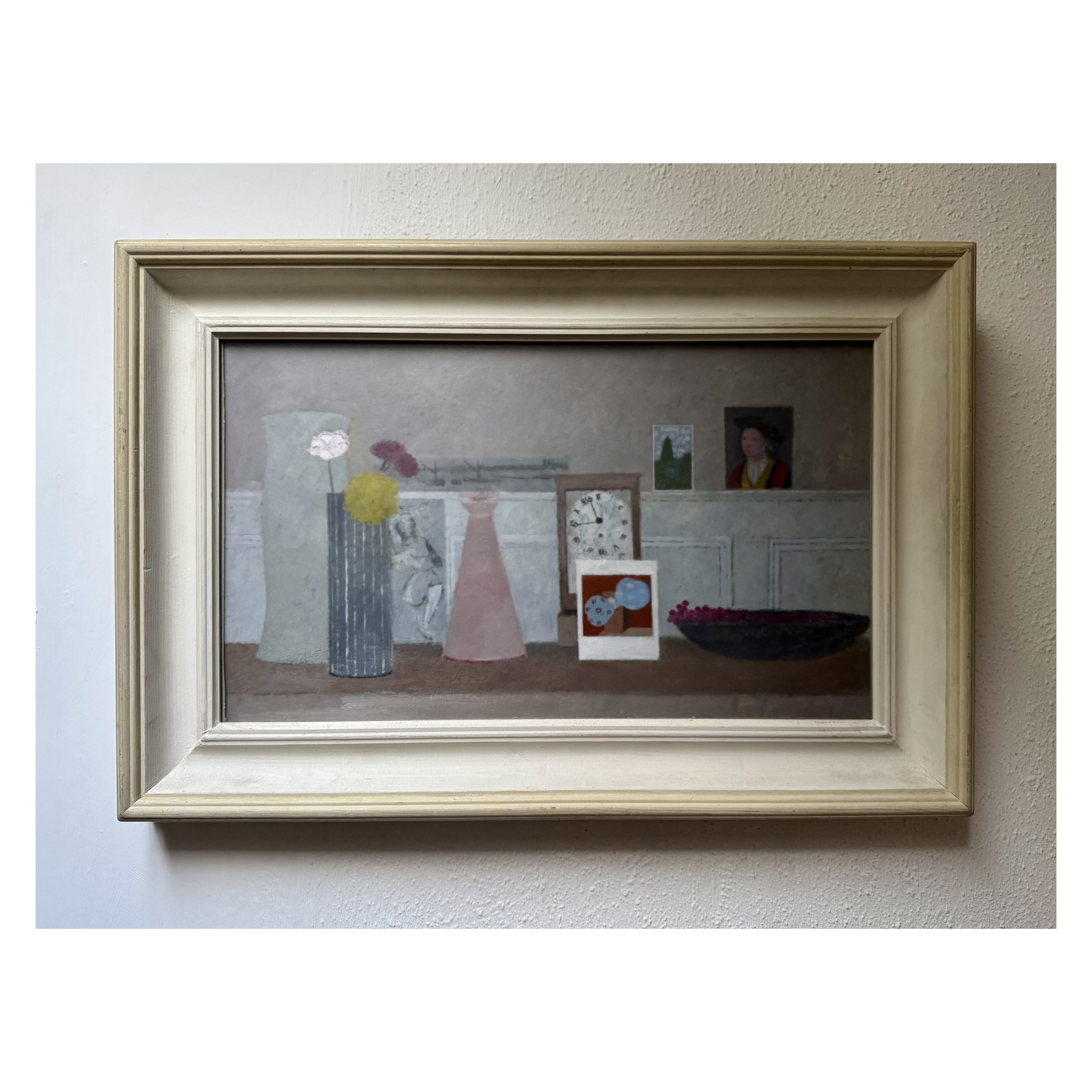 Image 1 of 6
 Image 2 of 6
 Image 3 of 6
 Image 4 of 6
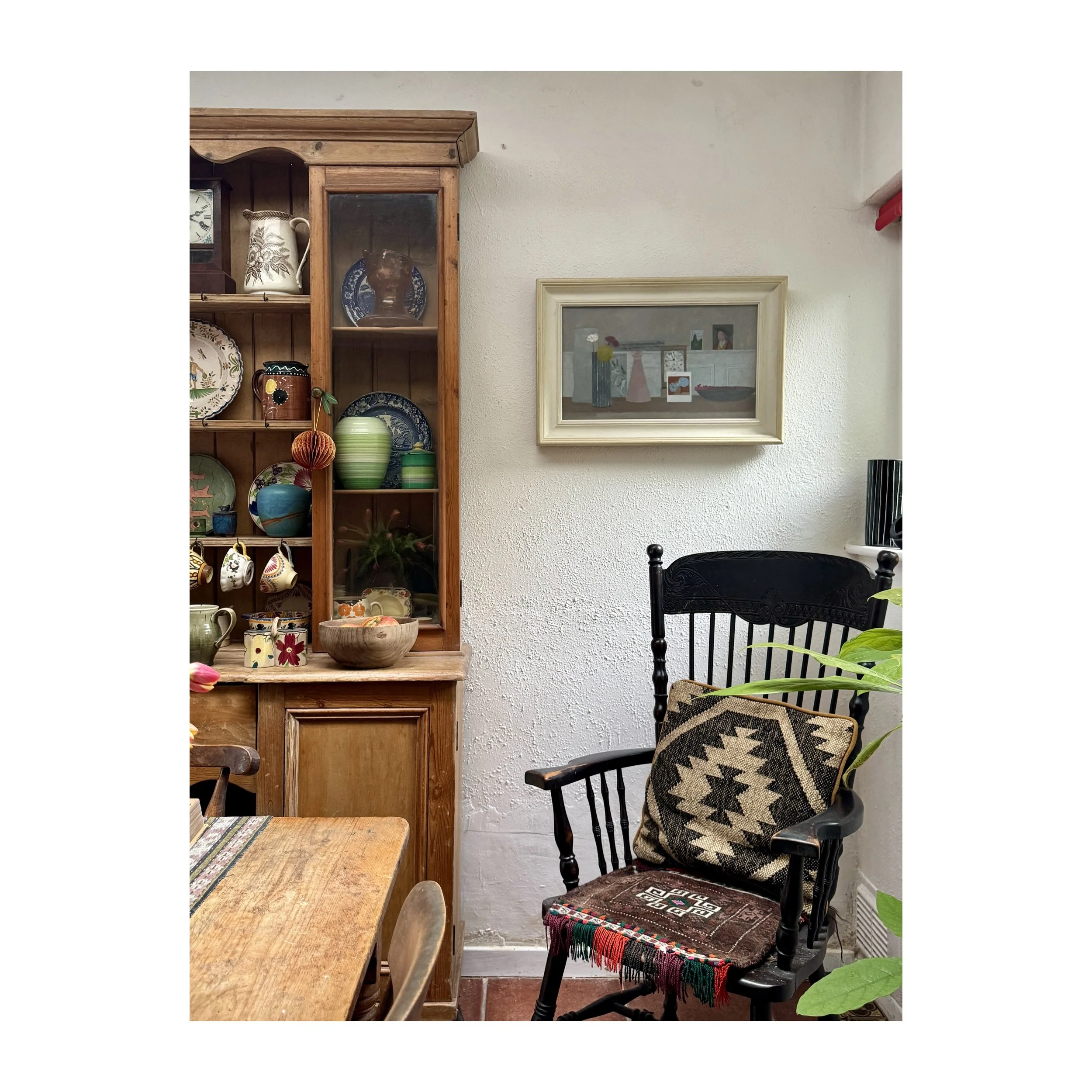 Image 5 of 6
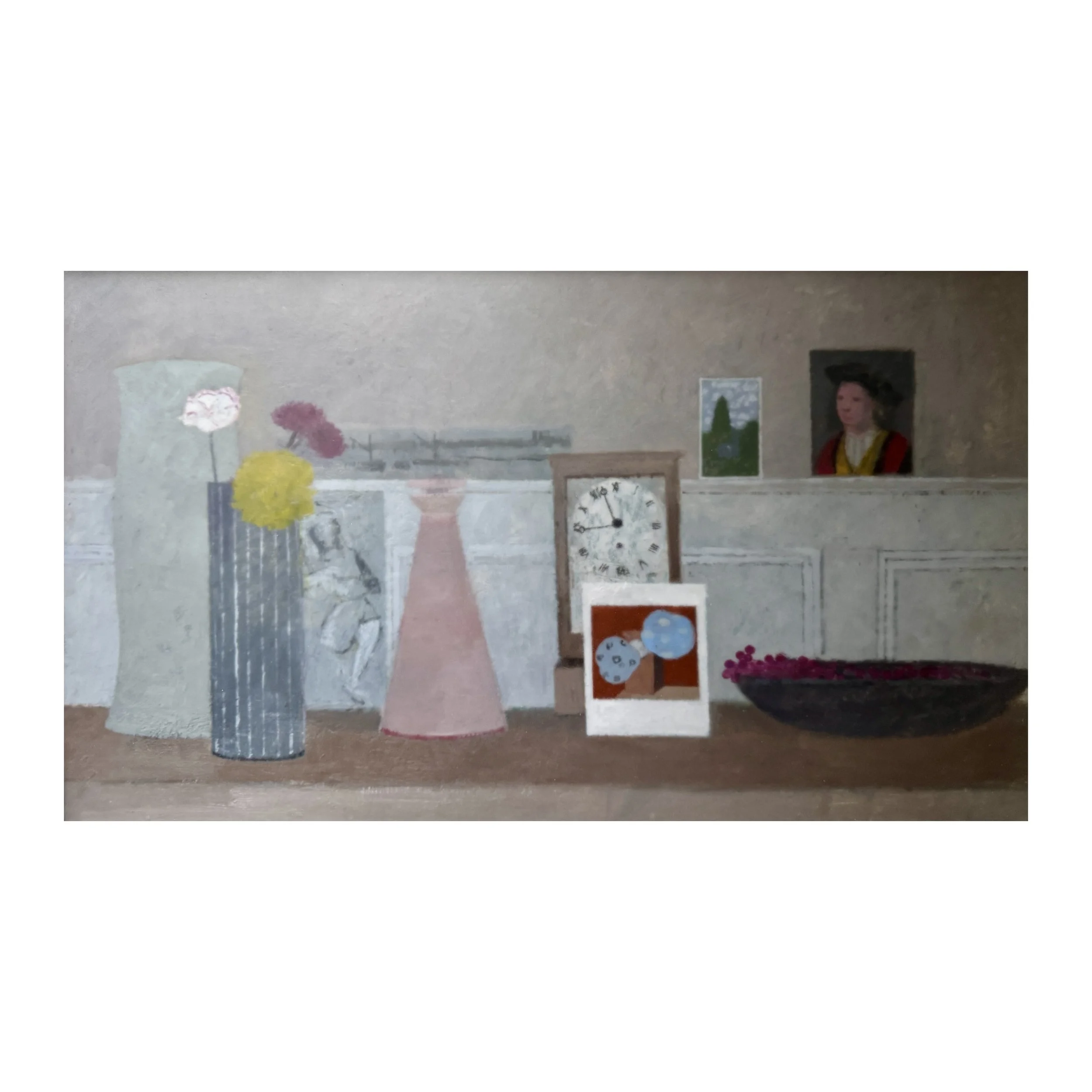 Image 6 of 6